Introduction
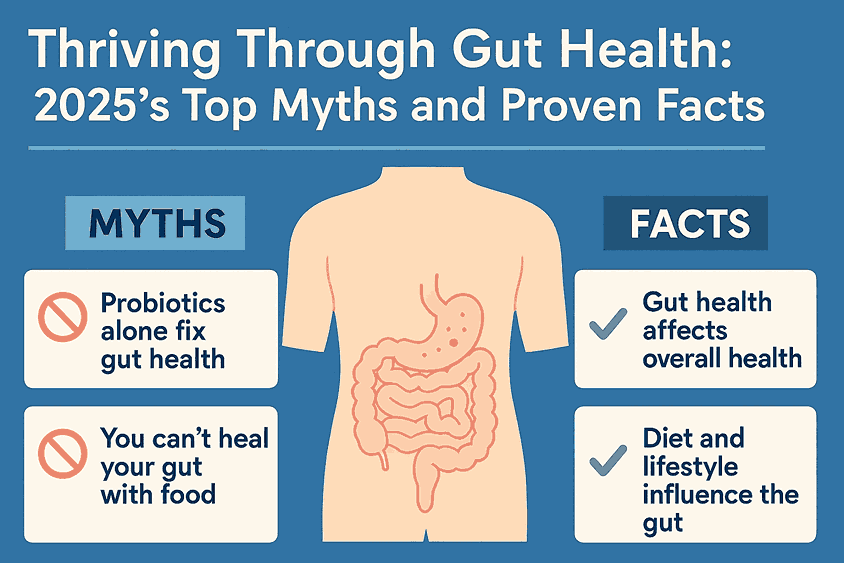
Gut health has become a global wellness priority, with millions turning to probiotics, cleanses, and food trends in pursuit of better digestion and immunity. Yet, misinformation is rampant. In 2025, new research continues to uncover what truly supports our microbiome and what doesn’t. This article separates enduring myths from proven facts to help you make informed choices about your gut and overall health.
Myth 1: All Bacteria Are Bad
Fact: Not all bacteria are harmful; in fact, many are essential for health.
While it’s true that harmful bacteria can cause disease, your body hosts trillions of beneficial microbes in your digestive tract. These bacteria help digest food, synthesize vitamins (like B12 and K), and regulate your immune system. According to a 2025 study published in Nature Microbiology, maintaining a balanced gut flora is linked to reduced inflammation and better metabolic health.
Myth 2: A “Cleanse” or Detox Fixes Your Gut
Fact: Your body detoxifies itself naturally.
Juice cleanses and colon detoxes are often marketed as gut health solutions, but there’s no scientific basis for most of these practices. The liver and kidneys are already highly efficient at removing waste and toxins. Experts at the Cleveland Clinic emphasize that a fiber-rich diet and regular hydration are far more effective at supporting digestion.
Myth 3: Probiotics Work for Everyone
Fact: Probiotic effectiveness depends on the individual and the strain.
While probiotics are beneficial, they are not a one-size-fits-all solution. Research in 2025 shows that specific strains of probiotics (e.g., Lactobacillus rhamnosus GG or Bifidobacterium infantis) target specific conditions. A review in Frontiers in Microbiology concluded that personalized probiotics based on an individual’s microbiome profile are more effective than generic supplements.
Myth 4: Antibiotics Only Affect Illness-Causing Bacteria
Fact: Antibiotics disrupt the balance of all gut bacteria.
Antibiotics are life-saving, but they also kill beneficial gut bacteria. This disruption can lead to imbalances, causing issues like diarrhea, bloating, or even long-term metabolic changes. Doctors now recommend using probiotics alongside antibiotics and focusing on fermented foods post-treatment to help restore gut balance.
Myth 5: You Need Supplements to Have a Healthy Gut
Fact: A balanced diet is more effective than supplements alone.
While supplements can help fill gaps, whole foods offer a diverse range of prebiotics, fiber, and nutrients essential for gut flora. A global study by the World Gastroenterology Organisation (WGO) in 2025 found that diets rich in vegetables, legumes, whole grains, and fermented foods promote a healthier and more diverse microbiome than supplement-based approaches.
Myth 6: Gluten Is Bad for Your Gut
Fact: Gluten only harms individuals with specific conditions.
Unless you have celiac disease or non-celiac gluten sensitivity, there’s no need to avoid gluten. Whole grains like wheat, barley, and rye contain prebiotic fibers that feed beneficial bacteria. Eliminating gluten unnecessarily may reduce microbiome diversity. The Harvard T.H. Chan School of Public Health continues to support whole grains as part of a gut-friendly diet.
Myth 7: All Fermented Foods Improve Gut Health
Fact: Not all fermented foods contain live probiotics.
Fermented foods like yogurt, kimchi, and kefir are praised for their probiotic benefits. However, not all of them retain live bacteria by the time you eat them. Pasteurization or high heat can destroy probiotics. To ensure benefit, choose products labeled with live and active cultures and avoid overly processed versions.
Myth 8: Your Gut Health Doesn’t Affect Mental Health
Fact: The gut-brain connection is scientifically proven.
The gut and brain communicate via the gut-brain axis, influencing mood, stress, and even cognition. Serotonin, a neurotransmitter that regulates mood, is largely produced in the gut. A 2025 clinical review in The Lancet Psychiatry confirms that a balanced gut microbiome supports lower anxiety and depression levels, reinforcing the importance of gut health for emotional well-being.
Myth 9: Children Don’t Need to Worry About Gut Health
Fact: Gut health is critical from infancy.
The first 1,000 days of life are essential for microbiome development. Breastfeeding, diet diversity, and avoiding unnecessary antibiotics play a major role. Pediatricians now emphasize gut-friendly nutrition for kids, such as yogurt, fruit, and whole grains, to establish long-term digestive and immune health.
Myth 10: More Fiber Is Always Better
Fact: Fiber needs to be introduced gradually.
Fiber supports digestion, but overloading your system too quickly can cause bloating, gas, and discomfort. Experts suggest gradually increasing fiber intake and drinking more water. Soluble fibers (found in oats, apples, and carrots) are easier on the gut than insoluble ones when starting out.
How to Support Gut Health in 2025
Here are science-backed, globally applicable tips for a healthier gut:
- Eat Diverse Whole Foods: A variety of plants supports a diverse microbiome.
- Include Fermented Foods: Choose ones with live cultures (e.g., kefir, kimchi, miso).
- Limit Ultra-Processed Foods: These can harm beneficial bacteria.
- Stay Hydrated: Water helps fiber move through the digestive system.
- Get Enough Sleep: Poor sleep disrupts gut microbiota balance.
- Manage Stress: Practices like meditation and exercise benefit the gut-brain axis.
- Avoid Unnecessary Antibiotics: Only take them when prescribed.
- Be Physically Active: Movement aids digestion and microbiome diversity.
Conclusion
Gut health is not about trendy detoxes or fear-based food avoidance. It’s a holistic, science-driven aspect of wellness that affects everything from your digestion to your mood. In 2025, the science is clear: personalized nutrition, balanced habits, and informed choices make the biggest difference. Always consult a healthcare provider before making major dietary changes.
For deeper insights, explore expert sources like the World Gastroenterology Organisation, NIH Human Microbiome Project, and journals such as Nature Microbiology.